

At Pant WI’s September meeting, it was the turn of a committee member to experience what it’s like to be a speaker. Sarah Freshwater, a freelance proofreader and Advanced Professional Member of the Chartered Institute of Editing and Proofreading, gave a presentation about the role of a proofreader in the publishing sphere.
While many think that – once a book is written – it’s the proofreader who is the only person to be involved in correcting errors, Sarah explained that it is actually a copy-editor who sees the raw and draft text first. Working directly with the author, the copy-editor does the first read-through to correct errors (such as with grammar and punctuation) and check facts; ‘shapes’ the text so that it is appropriate for the intended readership; ensures it follows the publisher’s house style and writing guidelines; and marks up the various elements (eg font and style of headings, positioning of illustrations etc) for the typesetter.
The role of a proofreader is as the final pair of eyes before the book goes into print and hits the bookshelves, so it’s the last chance to catch any errors that may have been missed by the copy-editor or been created by issues with the typesetting process – for example, nonsequential page numbers, missing tables and figures, or incorrect fonts. Working purely on non-fiction books, as opposed to novels, Sarah gave an overview of the parts of a book that need checking and also emphasised how important it was that the text was consistent across the whole manuscript. Times of the day could be presented in various ways: 9.00am, 9am, 9.00AM, 9AM etc. Initialisms could be presented with or without full stops, or with spaces – for example: BBC, B.B.C., B B C. Quotation marks could be single or double. A decision had to be made as to which style would be used. While such style decisions were initially made – and hopefully incorporated – at the copy-editing stage, it’s the proofreader who ensures that consistency has been applied throughout the book. A reader would find it irritating if the text was inconsistent and that would obviously impact their enjoyment of reading the book.
As Sarah also works on books published in US English, she demonstrated some differences between UK and US English aside from the obvious colour/colour or defence/defense that are familiar to everyone. She also busted the popular myth that spellings such as ‘realize’ and ‘organize’ – using the letter ‘z’ rather than ‘s’ – had infiltrated UK English from our friends across the pond. In fact, the ‘z’ spelling has its roots in Ancient Greek and can be found in the King James Bible and Shakespeare’s works. It is also the preferred spelling of both Oxford and Cambridge University Presses. So, over time, UK English has evolved to use the ‘s’ spelling.
The competition was ‘Most inspirational book’. Janet Jones took first place, Margaret Williams was second and Eiry Roberts was third.
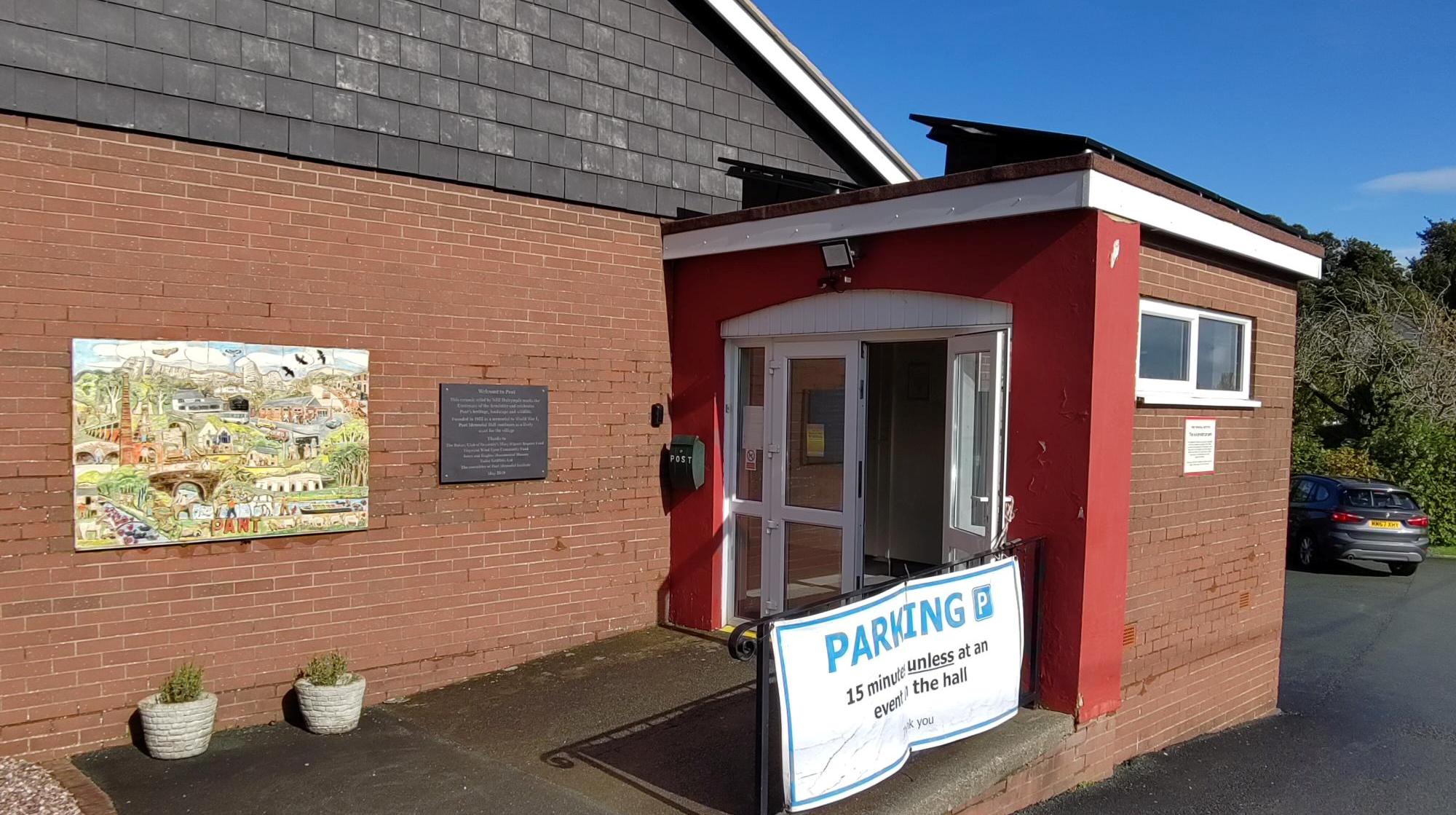
New members or anyone who is interested in coming along and finding out more about Pant WI, please get in touch at pantwi1931@gmail.com. Meetings are held on the first Thursday of every month at 7.15pm at Pant Memorial Hall. At October’s meeting, the speaker will be Victoria Graham who will present a talk on ‘Remembrance in Oswestry: Past and Present’.